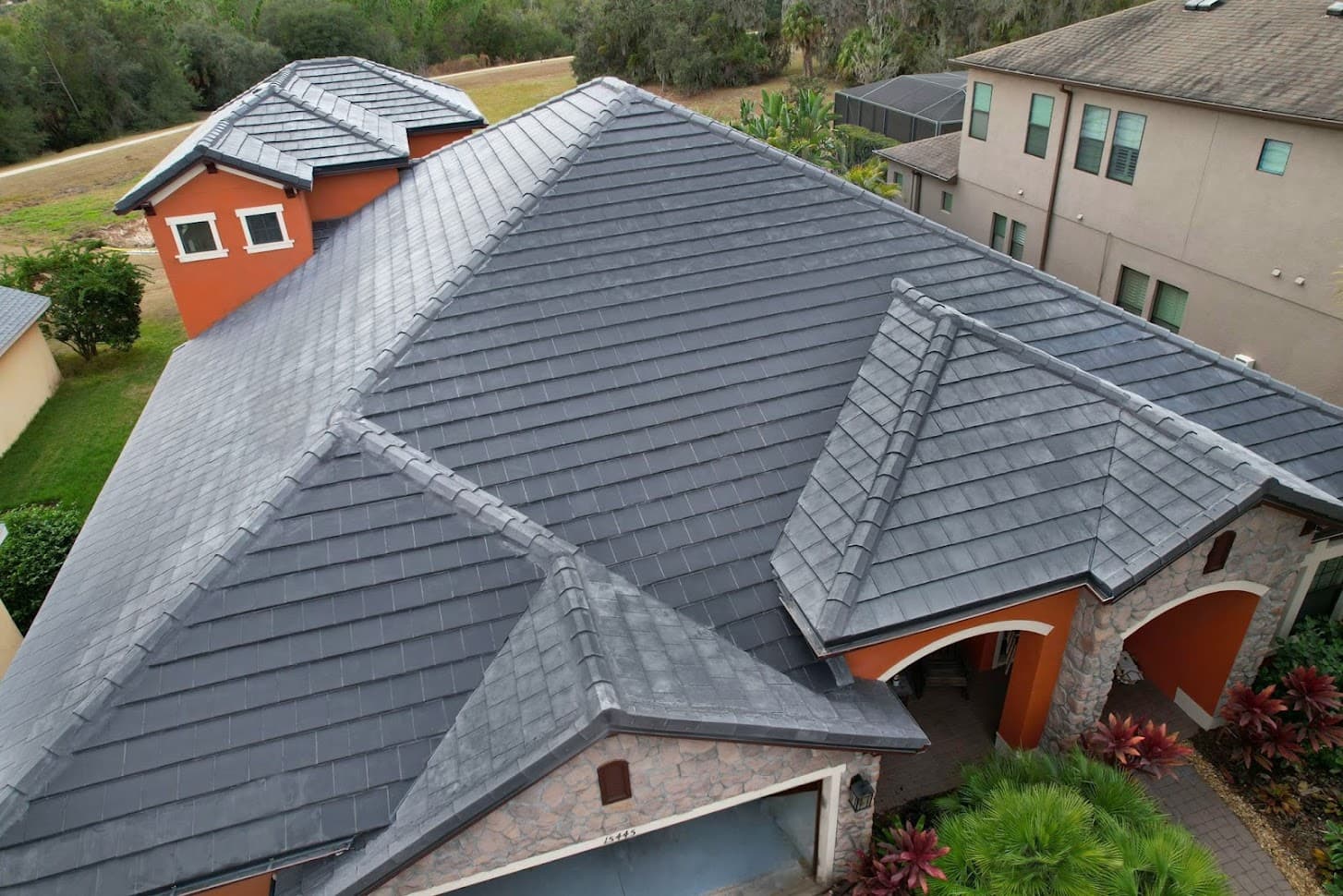
The Hamptons is the most design conscious residential market in the Northeast. Vitruvion serves homeowners here with architecturally integrated solar roof tiles that match the ambition of the architecture.
The Hamptons is not a single place but a constellation of communities that together define what premium residential architecture looks like in the American Northeast, and that have done so with increasing design ambition for the better part of a century. Southampton Village, with its historic shingle style estates and its tradition of serious residential stewardship. Water Mill and Bridgehampton, where the agricultural landscape of the East End meets the architectural ambition of the contemporary house at a scale that accommodates both. Sagaponack and Wainscott, where lot sizes are generous, architectural commissions are significant, and the properties that exist on those lots represent the full range of American residential architecture from the nineteenth century through the present. East Hampton Village, Amagansett, and Montauk, each carrying its own cultural identity and its own architectural character, unified by the quality of the investment and the seriousness with which material decisions are made. Across all of these communities runs a common thread of architectural intentionality and material ambition that is simply not found at the same concentration anywhere else in the Northeast. New construction in the Hamptons regularly engages nationally recognized architects. Renovations are treated as architectural events, documented in shelter publications, reviewed by historic preservation boards, and specified to the standard that the investment demands. The homeowners who build here are, by and large, people who have thought carefully about materials throughout their professional and personal lives. They know the difference between a specified surface and an installed product, and they will not accept the latter when the former is available.
The conventional solar industry has largely failed this market, and it has failed it in a way that the market noticed and rejected definitively. The clients who build in the Hamptons have already rejected other shortcuts on their properties, they do not use stock millwork where custom is possible, they do not specify commodity fixtures where the designed alternative exists, and they do not make aesthetic concessions because something is easier or less expensive. A rack mounted solar panel array on a Hamptons roofline is simply not something that happens on the properties where Vitruvion works, because the people who own those properties made a clear decision when they built or bought them about what they were willing to live with, and a conventional solar installation does not meet that standard. The question those owners have been carrying, often for years, is whether there is a solar surface available that is specified like any other architectural material: matched to the building's profile, invisible from any angle, permanently integrated into the roof structure, and backed by a firm that understands what they have built and intends to honor it. Solar roof tiles Hamptons NY that are not a product installed on a roof but a surface that is the roof. Solar roof shingles East Hampton specified to match the shadow line and surface character of the existing architectural material. Architecturally integrated solar Hamptons as a genuine design first discipline rather than a marketing category. BIPV Hamptons NY performed at the level that the East End residential market demands. Invisible solar roofing Southampton that a preservation board can approve and a national caliber architect can specify with conviction. Vitruvion is that firm, and Vitruvion's approach is the answer to the question those owners have been asking.
The technical case in the Hamptons is as strong as the architectural one, and it compounds the value of a Vitruvion investment over time. The East End of Long Island receives excellent solar irradiance, southerly orientation for most of the shoreline, limited shade from surrounding structures for the large lot properties where Vitruvion typically works, and strong direct irradiance for the majority of the year. A south facing roofline in Southampton or East Hampton that is properly specified with integrated solar tiles is a high performance energy generation surface from the moment of installation and for the entire remaining life of the building. There is no performance degradation that requires system replacement on a shorter cycle than the roof itself. There is no maintenance regime beyond what any high quality roof requires. The investment is made once, at the moment of roof replacement or new construction, which is the correct and only moment to make this investment, and the surface performs permanently, without maintenance cycles specific to the energy system, without replacement schedules, and without any visual evidence from the ground, from adjacent properties, from aerial photography, or from any other angle of observation that the roof is doing anything other than being an exceptional piece of architecture. This is the standard that the Hamptons residential market applies to every material on every building, and it is the standard Vitruvion meets on every project it accepts.
Southampton Village, Water Mill, Bridgehampton, Sagaponack, Wainscott, East Hampton Village, Amagansett, Montauk, Sag Harbor, and North Haven together constitute the core of Vitruvion's East End work. The range of architectural character across these communities, from the historic shingle style estates and Colonial Revival houses of Southampton to the spare modernist volumes of East Hampton and the transitional vernacular architecture of Sag Harbor, requires specification versatility of the highest order. A material answer that is right for a 1920s Southampton estate roof is a different specification than what is right for a 2022 East Hampton modernist house, even though the underlying objective is identical in both cases: a solar surface that is architecturally indistinguishable from the best non solar alternative. Vitruvion's design first process is built for exactly this range of buildings, and the depth of the specification work reflects the depth of the architectural investment in each property.
Vitruvion also serves the North Fork and the transitional communities between the Hamptons and the rest of Long Island's East End, where significant residential properties exist outside the most publicized Hamptons addresses but carry the same standard of architectural investment and the same expectation of material quality. The firm's work on the East End tends to begin at the architectural specification stage, during new construction design development or at the point of a serious roof replacement where the full scope of the roofline is being reconsidered, which is the right moment for this investment and the point at which it integrates most naturally into the project budget and timeline. Attempting to add integrated solar to a project after the architectural decisions have been finalized is harder and more expensive than incorporating it from the specification stage; Vitruvion's preference is always to enter the project at the earliest possible point, work with the architect of record through the material development process, and deliver a final specification that reflects the full architectural intention of the project.
If you are building or renovating on the East End and want to understand what architecturally integrated solar can look like on your specific project, this is where that conversation starts. Tell us about the building, the roofline, and what you are working toward. That is enough to begin.
Request a Consultation